


.png)
The global transportation landscape is transforming faster than ever, largely due to the rise of Artificial Intelligence (AI). By 2026 and beyond, taxi apps will no longer be simple ride-booking platforms — they will evolve into intelligent, predictive, and highly personalised mobility ecosystems.
Whether you're building a startup, upgrading your existing taxi business, or entering the global ride-hailing market, integrating the right AI-powered features is now essential. AI improves efficiency, safety, revenue, and customer experience, making your platform future-ready.
In this comprehensive, fully elaborated guide, you’ll discover the Top 15 Artificial Intelligence features every next-generation taxi app must include to stand out in 2026 and the future.
Let’s begin the journey toward smarter mobility.

Ride matching is the heart of any taxi app. But the old “nearest driver gets the ride” logic is outdated.
Next-gen AI systems evaluate 20+ data points in milliseconds to match riders and drivers with unmatched accuracy.
Real-time traffic conditions
Driver acceptance patterns
Ratings for similar previous rides
Rider preferences (quiet ride, female driver, EV, SUV)
Historical cancellation rate
Driver familiarity with the pickup location
Expected time-to-reach
Driver’s performance score
Rider’s behavioural data
By weighing these parameters, AI connects a passenger with the best possible driver, not just the closest one.
This is the foundation of a brilliant taxi app.
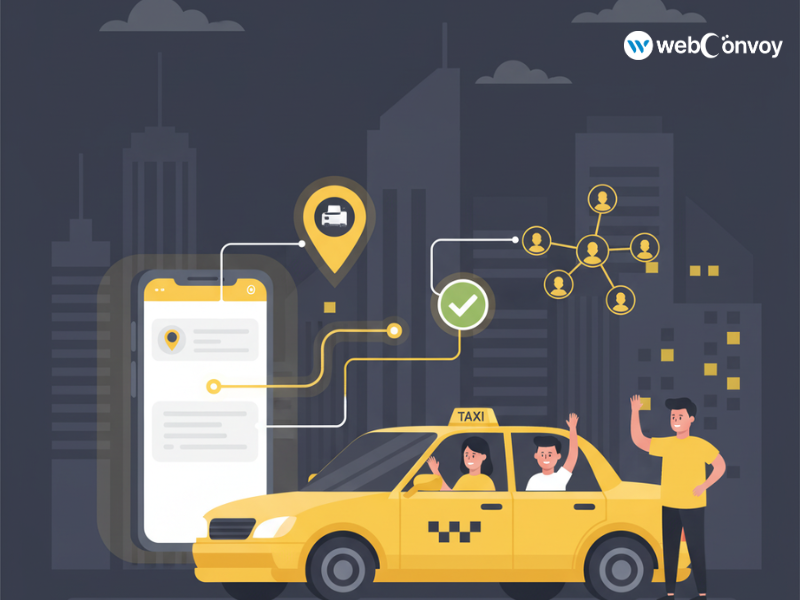
In 2026, taxi apps will utilise predictive heat maps that visually indicate upcoming high-demand areas — before demand even arises.
AI studies:
Weather forecasts
Flight arrivals and train schedules
Festival/event calendars
Office rush hours
Social media event mentions
Weekend nightlife patterns
Traffic congestion data
Historical ride logs
The system highlights potential hot zones on the map, guiding drivers to areas where they’re most likely to get rides quickly.
Drivers earn more, users wait less, and the business thrives.
Future pricing models will move beyond basic surge systems. Instead, AI will create ultra-optimised micro-pricing based on dozens of factors.
Weather severity
Local events
Peak and off-peak timings
Road closures and accidents
Fuel prices and EV charging rates
Driver availability
Real-time demand spikes
Competitor pricing in the same location
Rider loyalty level
This ensures pricing is fair, transparent, and profitable.
Smart pricing = happy users + increased profits.
Users will soon interact with taxi apps like they interact with Siri or Google Assistant.
“Book a cab to the airport.”
“Add a stop at my friend’s house.”
“Share my live location.”
“What’s my driver’s ETA?”
“Apply a promo code.”
AI voice assistants create a smooth, accessible, zero-touch booking experience.
AI voice integration is the future of app accessibility.
Security is a top priority. AI biometrics ensure both drivers and riders are who they claim to be.
Driver identity matches with government IDs
Passenger identity verification
Liveness detection to avoid photo fraud
Emotion analysis during login (optional)
For women riders or late-night bookings, this feature builds massive trust.
Route optimisation is evolving into intelligent, situation-aware routing.
AI checks:
Micro-traffic data
Accidents and closures
Road quality (potholes, rough patches)
Weather impact
Toll-free alternatives
Real-time route patterns
UTC-based shortest time estimate
Rider’s preferred or past routes
It doesn’t choose the “fastest” route — it chooses the smartest one.
Smart routing improves both user comfort and fleet efficiency.
This is where AI takes taxi apps from “transportation” to “personalised mobility experience.”
Preferred car type (Sedan, EV, SUV)
Preferred driver communication style (quiet/chatty)
Default payment method
Favorite routes
Temperature and AC preferences
Automatic playlist syncing from Spotify/YouTube
Preferred pickup and drop trends
Suggested upgrades based on behaviour
Example:
If a user regularly books SUVs for airport trips, the app automatically recommends the same next time.
Personalisation is the future of customer retention.
AI chatbots now handle 70–80% of customer queries without human agents.
Refunds
Cancellations
Lost item reports
Driver disputes
Promo code issues
Fare breakdown explanations
Ride rescheduling
These bots understand context, tone, and user intent, making conversations natural and effective.
Support becomes faster, smarter, and always available.

AI telematics monitors driving behaviour in real time.
Speed patterns
Sudden braking
Harsh acceleration
Drifting or lane-cutting
Distraction (phone usage)
Risky turning patterns
Fatigue or drowsiness
Drivers receive a safety score, which affects their incentives and ride eligibility.
Smart telematics create safer roads.
Fraud is a massive problem in the ride-hailing industry. AI eliminates fraudulent activities instantly.
Fake GPS movement
Ghost rides
Driver-rider collusion
Promo code misuse
Bot-based fake bookings
Credit card fraud patterns
Multi-account manipulation
Fraud prevention is essential for a secure, reliable platform.

AI helps taxi companies automate operations behind the scenes.
Driver shift allocation
Vehicle assignment
Area-wise car distribution
Idle car relocation
EV charging schedules
Fleet cleaning schedules
Predictive supply-demand balancing
This reduces manual workload and speeds up fleet operations.
Fleet automation is the backbone of future ride-hailing platforms.
AI sensors help drivers maintain their vehicles proactively.
Battery health (for EVs)
Engine performance
Brake wear
Tire pressure
Fuel efficiency
Overheating risks
Exhaust & emission levels
This helps identify early-stage problems before they become serious.
Predictive maintenance = fewer cancellations + safer trips.
Safety-focused AI is the most important feature for 2026 and beyond.
Off-route movement
Suspicious long stops
High-speed driving
Passenger distress via audio cues
Crash prediction using telematics
Triggering SOS
Alerting emergency contacts
Calling the nearby police
Recording the session
Sharing live route with admins
This builds an incredibly strong safety shield around riders.
Driver fatigue is one of the biggest causes of accidents.
AI cameras and sensors detect signs like:
Eye drooping
Micro-sleep
Slow reaction time
Yawning
Stress levels
Lack of movement
Drivers receive automated alerts, and the system may restrict new ride assignments until they rest.
AI becomes a guardian for both drivers and passengers.
AI helps taxi apps generate huge revenue from hyper-personalised ads.
Travel patterns
Locations visited
Spending habits
Lifestyle category
Ride frequency
Time-based behaviour
Airport travel offers
Movie tickets near the drop-off
Shopping discounts
Restaurant deals
EV accessories
Insurance for frequent travellers
This improves monetisation without hurting user experience.

As AI continues to revolutionise mobility, the future of taxi apps lies in intelligence, automation, personalisation, and safety. A next-gen taxi app is not just about booking rides — it’s about delivering a smart, predictive, and emotionally aware mobility experience.
By integrating these Top 15 AI features, your taxi platform will not only stand out but also become future-proof, scalable, and globally competitive.
AI is not just the future of transportation —
AI IS transportation.
Innovating, designing, and developing solutions that redefine how the digital world connects, learns, and grows.