


Every business needs content. Whether it’s a blog post, an email, a social media update, or a website page, content helps companies get noticed, build trust, and bring in new customers.
But creating good content takes time. Marketing teams need to find topics their audience cares about, research and gather information, write and edit, optimize for search, publish, and track how everything performs, and that's just one piece of the job.
It's no surprise, then, that AI has become a regular part of the content marketing process. According to HubSpot's 2026 State of Marketing report, 86.4% of marketing teams now use AI in at least some areas of their work, with content creation among its most common uses.
Businesses are using AI to find content ideas, speed up research, repurpose existing content, assist with writing, and simplify many of the repetitive tasks involved in content marketing. But that doesn't mean AI should create everything. For businesses exploring different types of AI solutions, understanding the difference between AI agents and AI chatbots is a useful starting point.
The goal is to use AI where it saves time and makes the work easier, while keeping human creativity, experience, and judgment in the driver's seat.
Content marketing is the process of creating and sharing useful content to attract and connect with a specific audience. Instead of focusing only on selling a product or service, businesses use content to answer questions, solve problems, share useful information, and help people make better decisions.
It can take many forms:
For example, a software company might publish an article on improving cybersecurity rather than pushing its own services directly. Someone searching for that information may find the article, learn something useful, and eventually become interested in the company.
Consistently sharing useful content can help a business build credibility, attract organic traffic, generate leads, and stay connected with its audience. While AI is changing how content is created, the basic goal of content marketing hasn't changed.
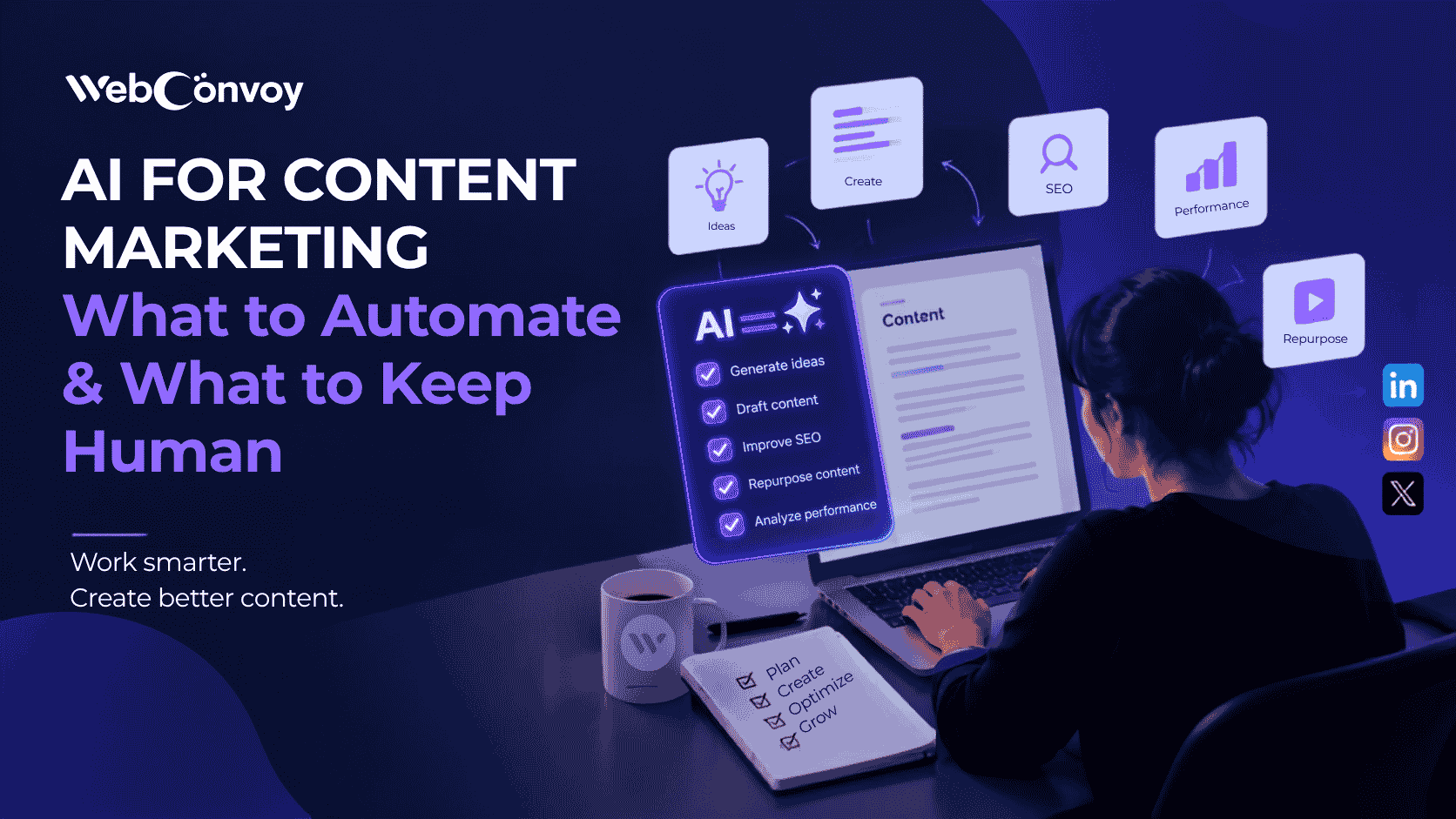
AI can’t handle your entire content marketing process on its own. Instead, businesses can use it to support different parts of the process, from finding ideas and researching topics to writing, SEO, and performance tracking. Here are some of the areas where AI can actually help.
1. Idea and Topic Research
Coming up with fresh topics every week can be one of the hardest parts of content marketing. AI tools can help identify search trends, understand common questions from your audience, and suggest related topics based on your industry. Instead of starting from a blank page, your team can start with a list of ideas worth exploring.
2. Speeding Up Research
Before writing, someone has to gather facts, data, and context. AI can help summarize reports, organize information, and highlight key points from sources much faster than doing everything manually. However, the information still needs to be checked before it makes its way into the final content.
3. Writing Assistance
AI is useful for drafting outlines, generating first-draft copy, or getting past writer's block. It can also help rewrite clunky sentences, adjust tone, or shorten long paragraphs. What it shouldn't do is publish content untouched. AI-generated drafts still need a human editor to add original insight, check facts, and make sure the content sounds like your brand.
4. On-Page SEO
AI tools can suggest keywords, generate meta titles and descriptions, identify content gaps, and flag missing headers or internal links. This can make some SEO tasks faster and give your team more time to focus on the content itself.
5. Repurposing Content
One piece of content can be turned into several others. For example, a detailed blog can later become a LinkedIn post explaining one key takeaway, a short video script, and an email for existing customers. AI can help turn the original content into these different formats quickly, helping teams get more value from the work they've already done.
6. Performance Tracking
Once content is live, AI can help summarize performance data and highlight patterns such as which posts are bringing in traffic, which topics are getting more engagement, or where readers may be dropping off. Instead of spending hours going through reports and spreadsheets, marketers can use AI to get a quicker view of what’s working and where changes may be needed.
AI can speed up many parts of content marketing, but it isn’t a replacement for the people doing the work. There are still several areas where human judgment matters most:
Original insight and experience.
AI can summarize what's already out there, but it can't share what your team has actually learned from working with real customers. That firsthand experience is often what makes content genuinely useful.
Brand voice and consistency.
AI-generated drafts can sound generic unless someone shapes them. A human editor is still needed to make sure content sounds like your company, not like every other business using the same tool.
Accuracy and fact-checking.
AI can get things wrong — confidently. Facts, statistics, quotes, and claims all need to be reviewed before anything goes live, especially in industries like finance, healthcare, or cybersecurity where mistakes can have serious consequences.
Reader trust.
People want content that feels useful, relevant, and genuine. Content that feels repetitive or impersonal can make it harder for a business to build trust, even when the information itself is accurate.
Strategy and judgment.
AI can suggest topics and help organize content, but it can’t decide what your business should stand for, which stories are worth telling, or when a topic simply doesn’t fit your brand. Those decisions still require human judgment.
Used well, AI takes care of the repetitive, time-consuming parts of content marketing — freeing your team to focus on the parts that actually require a human touch.
If you’re bringing AI into your content process, a few simple practices can help you get the benefits without losing the human side of your content.
1. Use AI to assist, not replace.
AI can handle research, outlines, and first drafts, but it needs a real person to edit the content, add their own insight, and give final approval before publishing it.
2. Always fact-check AI output.
Never publish statistics, quotes, or key claims generated by AI without verifying them against reliable sources first.
3. Keep a consistent brand voice.
Give your team clear guidelines around your company’s tone, writing style, and values. The next time you use AI, paste those brand rules right into your prompt so the generated content matches your brand’s voice.
4. Be transparent when it matters.
If your industry or audience expects disclosure about AI-assisted content, be clear about how AI was used. Being open with your audience can help maintain trust.
5. Track performance, not just output volume.
Posting content every day doesn’t mean much if nobody reads it. Focus on engagement, website traffic, leads, and conversions, and use those results to understand what type of content is actually useful to your audience.
6. Give your team real review time.
A quick skim isn’t the same as an edit. Give your editors time to double-check details, improve the draft, and make sure the content is useful and engaging.
7. Review your tools regularly.
AI technology evolves quickly. What worked six months ago may no longer be the best option for your team, so regularly re-evaluate your strategy and tools to make sure they are still solving the problems you need them to solve.
For businesses looking to expand their use of AI beyond content marketing, choosing between building AI capabilities in-house and working with an experienced AI partner is another important consideration.
AI has changed how content marketing gets done — not why it matters. Businesses still need content that builds trust, answers real questions, and connects with the right audience. AI simply gives teams another way to get some of that work done faster.
AI can handle many of the repetitive tasks of content marketing, from research and first drafts to repurposing, SEO suggestions, and performance analysis. But it can’t replace the judgment, creativity, experience, and understanding that your team brings to the work.
Businesses that get the most from AI aren’t necessarily the ones using it for everything. They’re the ones that know where it can help, where human input is still needed, and how to bring the two together.
If you’re looking to build a more efficient content strategy without losing the human side of your brand, that’s the balance worth aiming for.
Innovating, designing, and developing solutions that redefine how the digital world connects, learns, and grows.